When All Elite Wrestling launched in 2019, it wasn’t entering the industry quietly. It was stepping into a space long dominated by WWE, and it did so with a clear objective: be different.
Different in presentation. Different in philosophy. Different in how it treated both its talent and its audience.
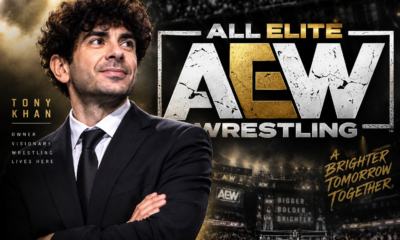
Under the leadership of Tony Khan and the creative direction of The Elite—Kenny Omega, Matt Jackson, Nick Jackson, and Cody Rhodes—AEW positioned itself as an alternative built on trust. Trust in its performers to deliver. Trust in its audience to invest. Trust that wrestling, at its core, still worked.
At AEW Double or Nothing 2019, that trust paid off. The event wasn’t just a success—it was a signal. Matches were given time. Stories were allowed to breathe. And perhaps most importantly, the audience responded in a way that suggested AEW had tapped into something real.
For a moment, AEW wasn’t just competing.
It was connecting.
From Alternative to Destination
Momentum came quickly. So did attention.
Within two years, AEW transformed from a startup promotion into a destination for some of the biggest names in the industry. The arrivals of CM Punk, Bryan Danielson, Adam Copeland, and Christian Cage elevated the company’s profile almost overnight.
But with that evolution came a challenge.
The original mission—build new stars—now had to coexist with an expanding roster of established talent. The balance between development and star power became more difficult to manage. Creative direction became less defined. And for the first time, AEW began to feel the weight of its own growth.
The question was no longer whether AEW could succeed.
It was whether it could sustain its identity while doing so.
Building Stars From Within
For all the attention placed on high-profile signings, AEW’s long-term viability has always depended on something else: its ability to create stars.
Darby Allin represents that success. A high-risk, high-reward performer with a distinct presence, Allin became a cornerstone not because of where he came from, but because of how he connected. His partnership with Sting elevated him without changing what made him effective.
Alongside him, MJF developed into one of the promotion’s defining figures. His ability to blend character work with in-ring performance positioned him as more than a rising talent. He became central to AEW’s identity.
“This isn’t a stepping stone,” MJF said during a media scrum. “This is where the best wrestle.”
That sentiment reflects a broader shift.
AEW is no longer defined by who arrives.
It’s defined by who it develops.
The Role of Veteran Leadership
While AEW’s future is tied to its younger talent, its stability has relied heavily on experienced veterans.
Chris Jericho has been central to that stability. As the company’s first world champion, Jericho brought credibility. More importantly, he brought consistency. Through multiple phases of AEW’s evolution, he remained a presence both on-screen and behind the scenes.
Other veterans have played similar roles. Bryan Danielson’s in-ring standard elevated the roster. Adam Copeland and Christian Cage added storytelling depth. Even figures like Jeff Jarrett contributed to the company’s internal structure and locker room culture.
These contributions have been less visible than headline signings, but no less important.
They provided balance.
A Turning Point: Cody Rhodes’ Departure
Cody Rhodes’ exit from AEW in 2022 marked a significant moment in the company’s evolution.
As one of its founders, Rhodes had been instrumental in shaping AEW’s identity. His departure raised questions about direction, leadership, and internal alignment.
In later interviews, Rhodes described the end of his tenure as “terrible, really,” citing a personal issue that left him feeling “disrespected.” At the same time, he acknowledged that the relationship remained complex, noting both tension and respect.
Tony Khan responded in measured terms.
“I’m not sure I agree with that,” Khan said. “But I give him the benefit of the doubt.”
The exchange did not escalate publicly. But it underscored a reality: AEW’s growth had introduced challenges that extended beyond the ring.
Brawl Out and Organizational Reality
If Rhodes’ departure raised concerns, the events following AEW All Out 2022 forced a reckoning.
During the post-show media scrum, CM Punk publicly criticized elements of AEW’s internal structure.
“I’m trying to run a business here,” Punk said.
The comments, combined with a subsequent backstage altercation, created one of the most significant controversies in AEW’s history. It shifted the conversation from creative direction to leadership and organizational control.
In later interviews with Ariel Helwani, Punk framed his actions as an attempt to address underlying issues.
“I wasn’t trying to burn the place down,” he said. “I was trying to fix something that I thought was broken.”
Regardless of perspective, the impact was clear.
AEW had reached a point where growth required structure.
Adapting in Real Time
Tony Khan has acknowledged as much.
“I’ve learned a lot,” he said in subsequent media appearances. “You have to adapt.”
That adaptation has taken multiple forms. AEW’s shift to smaller venues improved consistency and atmosphere. Roster decisions became more deliberate. Creative direction gained clarity.
Perhaps most notably, the company’s approach to talent acquisition evolved.
AEW no longer operates as a promotion focused on acquiring every available name.
It operates with a clearer understanding of fit.
From Roster to System
That shift represents one of the most important developments in AEW’s evolution.
In its early stages, acquiring talent was necessary. It established credibility and expanded visibility. But long-term sustainability requires a different approach.
It requires structure.
It requires defined roles.
It requires a system.
Darby Allin occupies a specific role within that system. MJF functions as a central figure. Chris Jericho provides continuity. The roster around them has been shaped with greater intention.
This is no longer a collection of talent.
It is an organization.
Where AEW Stands Now
AEW’s current position within the wrestling landscape reflects its growth.
It is no longer a startup. It is no longer defined solely by its differences from WWE. It has established its own identity, one built on a combination of in-ring focus, character development, and strategic adaptation.
The challenges ahead—television rights, roster management, long-term positioning—are those of an established promotion, not an emerging one.
That distinction matters.
The Value of Evolution
AEW’s story is not one of immediate success or sustained dominance.
It is a story of progression.
It is a company that entered the industry with a clear vision, encountered the realities of that environment, and adapted in order to move forward.
It has made mistakes.
It has faced criticism.
It has dealt with internal challenges.
But it has shown a willingness to evolve.
In an industry where perception often outweighs reality, AEW’s growth has been visible, imperfect, and at times uncomfortable.
But it has also been real.
And in a business built on performance, that authenticity may be its greatest asset.
AEW is no longer trying to prove it belongs.
It is operating as a company that understands it does—and is focused on what comes next.