Over the past three years, several baseball Hall of Famers, including players, managers, and broadcasters, have passed.
Back in 2022, I wrote a piece remembering the members of the Baseball Hall of Famers who passed that year. Over the past three years, several more members have passed. These ranged from players who found themselves in the greatest of all time debates to broadcasters and managers who established their fame from a different side of the game. Here is the first part of my two-part series. The series tells the stories of the baseball greats lost from 2023-2025.
Tim McCarver (Broadcaster)
(October 16, 1941-February 16, 2023, age 81)
From being a two-time All Star and World Series Champion as a player to calling several Fall Classics from the booth, C Tim McCarver saw the game from everywhere.
As a catcher, he led the St Louis Cardinals to two World Series titles in 1964 and 1967. Playing the majority of his career with the Cardinals and Philadelphia Phillies, McCarver became the preferred catcher for Hall of Famers SPs Bob Gibson and Steve Carlton.
Following his retirement, he began his broadcasting career with the Phillies in 1980. He then called games for the New York Mets from 1983-1998. Additionally, McCarver spent time in the booth with the New York Yankees and San Francisco Giants. He contributed as an analyst to all four major TV networks. In the booth, he offered deep baseball insights to fans across the country in some of baseball’s biggest moments. One such moment was the 2001 World Series. He analyzed the Yankees positioning just before OF Luis Gonzalez hit the historic walk-off RBI base hit in Game Seven.
McCarver was a staple of broadcasting each World Series from 1996 up until his retirement, following the 2013 Fall Classic. He found his way into Cooperstown in 2012 as the Ford C. Frick Award Recipient (one presented annually for excellence in baseball broadcasting). Following his retirement and accolades, McCarver continued to contribute as a part-time analyst for the Cardinals. He returned to the team where his baseball career all started. His involvement in the game as a player and broadcaster spanned seven different decades.
Brooks Robinson (3B)
(May 18, 1937-September 26, 2023, age 86)
Nicknamed “The Human Vacuum Cleaner” and “Mr. Oriole,” no third baseman truly held their ground at the hot corner like Brooks Robinson. He played his entire 23-year career with the Baltimore Orioles. Robinson was originally drafted as a second baseman. Through one of the hardest work ethics and most genuine love for the game, he made dazzling play after play. From perfecting the art of barehanding bunts and covering a vast range on the infield, Robinson consistently took away hits. To this day, he holds the all-time records for third basemen in games played, putouts, assists, double plays, zone fielding runs above average and range factor per innings. The last two are retroactive advanced metrics. Several of these records still look unreachable.
His success at third earned him 16 straight Gold Gloves, 18 All-Star nods and 1964 MVP honors (a year where he led the league with 118 RBI). Furthermore, in clutch situations, Robinson’s success with his bat complimented that of his glove. A member of two of the three Orioles World Series teams, he made his mark in the 1970 World Series where he hit .429 with two homers. Also, he made crucial plays at third with nine putouts.
His work ethic and amicable personality made him one of the most respected figures in Baltimore. In fact, sportswriter Gordon Beard once wrote, “Brooks never asked anyone to name a candy bar after him. In Baltimore, people named their children after him.”
Whitey Herzog (Manager)
(November 9, 1931-April 15, 2024m age 92)
Throughout the 1970s and into the ’80s, Missouri’s baseball teams tasted success experimenting with a style of play known as “Whiteyball”. The man behind this, Whitey Herzog, took over as manager of the Kansas City Royals in 1975. The following season, he led them to the first of three straight American League West Division titles.
In 1980, he took over as both manager and general manager of the St. Louis Cardinals. In St. Louis, he immediately turned a struggling team around. He made notable moves to acquire Hall of Famers CP Bruce Sutter and SS Ozzie Smith. The moves ultimately built the Cardinals into a team with the Whiteyball identity, one centered around speed, defense, and a lockdown closer rather than power hitting.
In 1982, that strategy came to full fruition. Smith and 1B Keith Hernandez each won Gold Gloves. Further, Sutter led the league with 36 saves. Additionally, seven different players finished with double-digit stolen base totals. That team would go on to win a tightly contested seven-game World Series over the Milwaukee Brewers. In the remainder of his managerial career, Herzog continued to taste success, winning two more National League pennants. He stepped away from managing in 1990 with a .532 winning percentage, forever leaving his mark of Whiteyball in the Midwest.
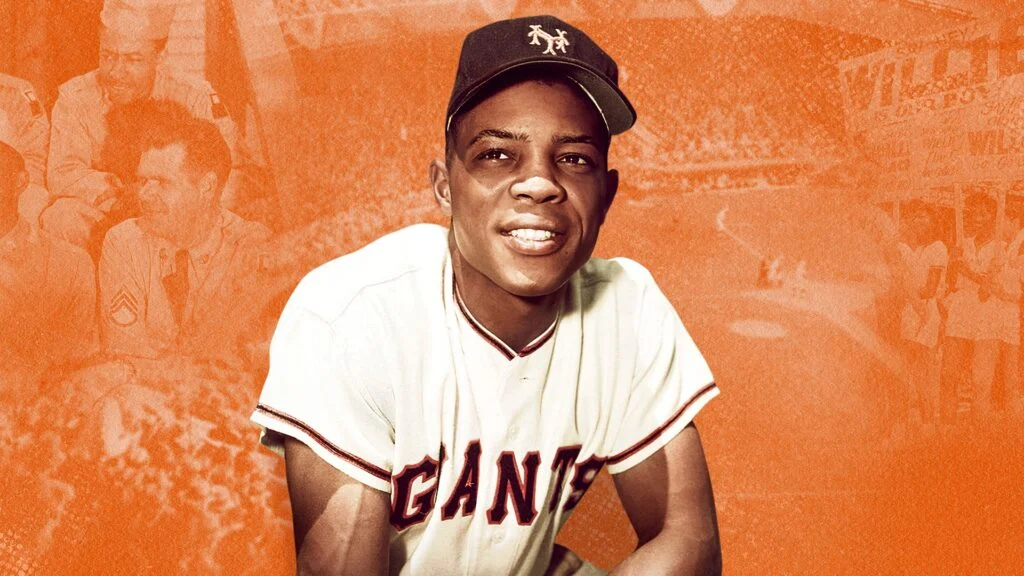
Willie Mays (OF)
(May 6, 1931-June 18, 2024, age 93)
The “Say Hey Kid” he was. He was that player that defined baseball greatness like no other. If baseball had a true Mount Rushmore of players holding each of the five necessary tools for greatness on the field, OF Willie Mays would be there.
He began his career with the Birmingham Black Barons of the Negro Leagues before signing with the New York Giants in 1950. Despite slumping at the beginning of his career, Mays turned it around in a heartbeat. His batting average gradually soared as did the fate of the struggling Giants. Mays would slug 20 home runs and win Rookie of the Year honors, playing a role in the Giants historic pennant run in 1951.
After serving in the military, Mays showed no rust in his return to the diamond in 1954. In just his second full season, he led the league across several statistical categories, posting a 10.5 WAR and batting .345 to earn MVP honors. Amidst his breathtaking numbers came one of the most talked about plays to this day. In the 1954 World Series, with a tie game in the eighth, Mays stretched out his glove to make a mind-boggling basket catch at the wall, robbing Vic Wertz of extra bases. He followed this up with a perfect throw from deep into the depths of the Polo Grounds to save a go-ahead run. The Giants would go on to win the World Series. This was only the start to Mays establishing himself as one of the greatest to play arguably the most important position, center field.
Mays would win 12 Gold Gloves, constantly exhilarating fans with the joy he took in playing the position. On top of that, at the plate, he produced power, contact hitting, and speed. He hit 40+ home runs six different seasons, led the league in triples in three and in stolen bases in four.
His numbers only tell part of the story. Having moved with the Giants from New York to San Francisco in 1958, Mays truly put West Coast baseball on the map. His fame played a role in fighting housing discrimination in San Francisco that existed at the time.
He finished his career as the all-time leader in putouts by an outfielder. At the plate, Mays became a member of the 3,000 hit and 600 home run clubs. Moreover, he posted a career .301 average. All these feats cemented him among the greatest Hall of Famers of all time.

Featured Articles








Featured Writers