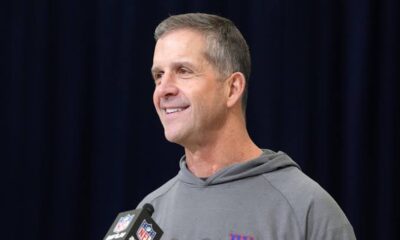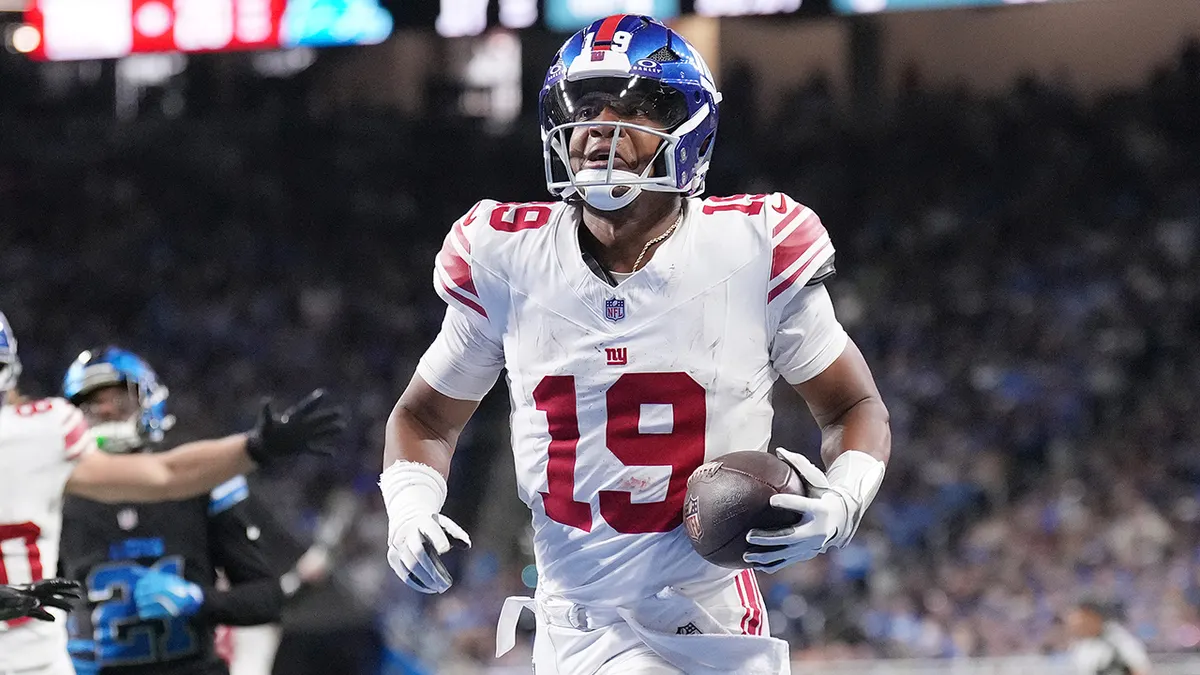
The New York Giants walked onto the practice field Thursday carrying the weight of a difficult week. The 28-6 loss to the Los Angeles Rams was disappointing enough, but the circumstances surrounding that loss changed the direction of the Giants’ season. Seven plays into Monday night’s game, quarterback Jaxson Dart went down with a knee injury. By Wednesday, head coach John Harbaugh confirmed what the team feared: Dart’s regular season was over.
For a young team that entered the season believing Dart, Malik Nabers and Cam Skattebo could become the foundation of something special, the news was devastating. Yet throughout Thursday’s media sessions, one message continued to come through from the locker room, the coaching staff and the players: they can feel the loss of Dart while still moving forward. Harbaugh acknowledged that losing the starting quarterback was a significant blow, but reminded his team that while Dart’s season is over, the Giants’ season is not. Dart was in the team’s meeting Wednesday, and Harbaugh said the quarterback was understandably disappointed but determined to remain involved.
“You wake up and you feel like it’s the end of the world,” Harbaugh said. “Then you wake up and the world’s not done. The world keeps spinning. The games keep getting played.” That has become the challenge for the Giants. There is a period of mourning when a player loses a season, especially a young player who had worked so hard to establish himself, but eventually the next game arrives. For New York, that next game is Sunday against Tennessee, and it will be played with Jameis Winston taking over at quarterback.
A Teammate Who Understands
Perhaps no player on the roster understands what Dart is experiencing better than Nabers. The third-year receiver has dealt with his own injury setbacks, so when he received the news about Dart, his reaction wasn’t simply that of a teammate losing his quarterback. It was the reaction of someone who understood the frustration and uncertainty that comes with having a season suddenly taken away.
“It takes a breath out of you for sure,” Nabers said. “Just feel for him. Like you said, I’ve been in that position too. So, I know what he’s going through. I know what he’s thinking. So, just trying to be there for him like he was there for me.”
The emotional part of the injury is magnified by what the Giants had hoped this young offensive group would become. Nabers and Dart have had very little opportunity to develop the kind of chemistry that comes from years of practices, games and offseason work. Nabers pointed out that even in practice, the two haven’t shared the field nearly enough to build that connection, making the loss particularly frustrating. The dream was to build something that could last for years, but injuries have repeatedly interrupted that process.
Still, Nabers isn’t ready to write off what that partnership could eventually become. He believes chemistry is built through time and preparation, and he expects that opportunity to come when both players are healthy again. For now, though, his concern is for his teammate. Nabers talked about Dart’s work ethic, describing a quarterback who came in early, stayed late and poured everything into giving the Giants the best chance to win. “One of your brothers gets down,” Nabers said, and the responsibility now is to make sure Dart knows he doesn’t have to go through the rehabilitation process alone.
That same sentiment came from Skattebo, perhaps Dart’s closest friend on the team. Skattebo admitted the injury was emotional for him because of how close the two have become, but his own experience recovering from an injury has given him an understanding of what Dart will face in the months ahead. He remembers what it was like to be around the team while recovering and how important that connection was. He believes Dart will remain around the Giants as much as possible and continue contributing even though he can’t play.
“It’s a little emotional for me,” Skattebo said. “It sucked to lose him, but we got to move on.” That doesn’t mean forgetting Dart. It means carrying him with them. Skattebo believes the Giants still have a long season ahead and that Dart will continue to help however he can. More importantly, Skattebo knows the team needs to maintain its belief and energy rather than allowing one devastating injury to become the defining story of the season.
The Opportunity Jameis Winston Has Waited For
That responsibility now includes Winston, whose opportunity arrives under circumstances nobody in the organization wanted. The veteran quarterback has been part of the Giants’ meetings, offseason program and training camp all along, giving him a familiarity with the system that allowed the transition to happen without starting completely from scratch. Harbaugh described the move as more of a “lane change” than an entirely new direction because the plays are already part of the offense and Winston has been involved throughout the process.
Winston understands the gravity of the moment. He has been waiting for another opportunity to be a starting quarterback, and he doesn’t hide how meaningful this chance is. “This is what I’ve always dreamed of, to be a starting quarterback,” Winston said. At the same time, he repeatedly brought the conversation back to Dart, making it clear that his excitement about his opportunity doesn’t diminish the concern he has for his teammate.
The quarterback’s mentality is straightforward: prepare, execute and lead. Winston said the role is different, but his mentality hasn’t changed. He intends to approach the week the same way he approaches every week, focusing on one play and one rep at a time while earning the trust of the players around him. He also knows the locker room needs more than words right now. It needs leadership through action.
That is exactly what Skattebo has seen from him. He described Winston as someone who is in the building early, stays late and approaches every day like a starter. The two quarterbacks have also spent significant time together, and Skattebo said they often think alike and ask similar questions. That relationship could become especially important as Winston takes over the offense.
Changing the Offense Without Changing Everything
Offensive coordinator Matt Nagy understands that Winston is not Dart, and the Giants aren’t going to pretend otherwise. Dart’s mobility was an important part of the offense, while Winston brings extensive NFL experience and a different skill set as a pocket passer. The goal isn’t to force Winston into Dart’s offense. It’s to build around what Winston does best.
Nagy explained that the Giants intentionally constructed their offensive system to accommodate multiple quarterback styles. That preparation is now paying off. Rather than throwing out the entire playbook, the Giants can shift toward concepts that make Winston comfortable while maintaining the core of what they already do.
The biggest difference between this week and Monday night is preparation. When Dart went down against Los Angeles, Winston was thrown into a game plan designed around another quarterback after only seven plays. Nagy explained that the weekly repetitions are critical, particularly the timing between a quarterback and his receivers. Winston may know the plays mentally, but executing them with the same timing as a quarterback who received the majority of the practice reps is completely different.
Now Winston has an entire week.
That should allow the Giants to play faster and more naturally, and it should allow the coaching staff to use more of Winston’s strengths. Nagy pointed specifically to Winston’s arm talent and the possibility of using certain concepts that take advantage of his ability to throw the football downfield. At the same time, the Giants know Winston’s aggressive nature can sometimes create risk. Nagy made it clear that protecting the football remains paramount, but the goal isn’t to coach Winston into becoming somebody he’s not.
“You just play his game, be who he is,” Nagy said.
For the Giants, that means finding the balance between Winston’s aggressiveness and the discipline necessary to play winning football.
Nabers and Winston Begin Building Their Connection
One of the most important relationships to develop will be between Winston and Nabers. The receiver has already started spending additional time with his new quarterback, trying to understand how Winston sees the field, how his ball comes out of his hand and where he wants receivers to be.
Nabers described it as a work in progress. He isn’t simply trying to learn Winston’s arm strength; he’s trying to understand his thought process. What is Winston reading? What does he see? Where does he expect Nabers to be when he makes his decision? Those details become increasingly important when the quarterback and receiver haven’t spent an entire season developing chemistry together.
But Nabers likes what he sees from Winston’s willingness to trust his receivers. Winston isn’t afraid to give his players opportunities, particularly in contested situations, and Nabers believes that trust can become a strength of the offense.
“He believes in his receivers to go make the plays for him,” Nabers said.
That puts responsibility on Nabers as well. If Winston gives him the opportunity, Nabers has to finish the play. The receiver understands that and appears eager to embrace it.
Skattebo Ready for Whatever Comes Next
The same is true for Skattebo, who understands that losing Dart could change the way the Giants distribute the football. He isn’t demanding more touches or viewing the situation as pressure. Instead, he sees it as another opportunity to contribute.
“I don’t look at it as an I need to do more,” Skattebo said. “It’s I get to do more.”
That mentality fits the personality Skattebo has brought to the Giants since arriving. He believes his physical running style becomes more effective as games progress and defenders become tired of dealing with him. Whether the Giants ask him to run more, catch more passes or take on additional responsibilities in the offense, he’s ready.
He also understands that his role extends beyond statistics. Skattebo has become increasingly vocal and emotional as a leader, and he knows the locker room needs players willing to keep teammates positive. He talked about helping players get in and out of the huddle, encouraging teammates and maintaining energy during a difficult week.
That could be just as important as anything he does with the football.
The Defense Has Its Own Corrections to Make
While the quarterback change has dominated the headlines, the Giants’ defense also has plenty to address after the loss to Los Angeles. Defensive coordinator Dennard Wilson was direct about the problems, particularly against the Rams’ running game and in the pass rush.
The Giants have generated pressure but have only one sack through two games, something Wilson knows must improve. He credited the Rams for using chips and for Matthew Stafford’s ability to get the ball out quickly, but he refused to blame the opponent for the Giants’ problems. The defense had breakdowns in run fits, missed adjustments and allowed explosive plays that came from mistakes the players had already practiced correcting.
Wilson’s message was simple: fix themselves first.
That means improving the pass-rush plan, finding different ways to attack protection and making sure the secondary executes its assignments. Injuries have forced changes in the defensive backfield, but Wilson doesn’t view that as an excuse. The next player has to step up.
The Giants will also have to prepare for a very different quarterback in Tennessee. Wilson knows Titans quarterback Cam Ward and respects the work the young quarterback has already put into developing his game. But regardless of whether the opponent is a veteran like Stafford or a young quarterback like Ward, Wilson believes the Giants have to play to their standard.
“We’ve got to be on our best every week in the National Football League,” Wilson said.
One player who has already established that standard is safety Jevon Holland. Wilson has been impressed with Holland’s ability to consistently be in the right position, make plays on the football and react aggressively once the opportunity presents itself. For Wilson, Holland is an example of what happens when a player consistently handles the small details correctly.
Special Teams Continuing to Build
The Giants’ special teams unit has also provided a reason for optimism through the first two games. Assistant head coach and special teams coordinator Chris Horton said the group is beginning to believe in the process and develop a shared understanding of what the unit should look like.
Punter Jordan Stout has been a major part of that early success, showing the ability to flip the field with his leg. But Horton emphasized that Stout’s success is dependent on the other ten players doing their jobs in protection and coverage. The same team-first approach has been evident with rookie kicker Dominic Zvada, who connected on a 52-yard field goal and is now gaining valuable game experience.
Horton isn’t concerned about Zvada’s confidence. Instead, he wants the young kicker to build consistency through repetition. The more opportunities he gets, the more comfortable he’ll become in game situations.
That theme runs through the entire Giants organization right now: preparation, repetition and trust.
A Team Forced to Grow Up Quickly
There is no pretending this is the season the Giants expected to be having after two weeks. The team began the year with excitement surrounding a young quarterback and a group of young offensive players who appeared poised to take another step together. Now Dart is sidelined for the remainder of the regular season, Winston has been thrust into the starting role, and players like Nabers and Skattebo are being asked to take on even more responsibility.
But the Giants aren’t treating the situation as an excuse.
They are treating it as a test.
Nagy acknowledged that losing Dart hurts. He has watched the young quarterback work every day and understands how much effort Dart put into getting to this point. But the offensive coordinator also believes this team is too close-knit to allow the injury to tear it apart.
“We’re fighters,” Nagy said. “We’re going to battle, and we are going to stay positive. We are going to stick together. We are going to fight.”
That message was echoed throughout the building Thursday.
Nabers wants to support Dart while continuing to build with Winston. Skattebo wants to keep the locker room’s energy high while accepting whatever workload comes his way. Winston wants to take advantage of the opportunity while making sure his injured teammate knows he’s still part of the team. The coaching staff wants to adjust without abandoning the identity they’ve spent months building.
And Harbaugh wants his team to understand that the circumstances may have changed, but the mission hasn’t.
The Giants still have football to play.
Dart’s season may be over, but his teammates don’t intend to leave him behind. He’ll remain part of the locker room, part of the preparation and part of the journey as he begins the long road back.
Meanwhile, Winston gets the opportunity he has spent years preparing for.
Nabers gets another chance to prove he’s capable of being the centerpiece of the Giants’ passing game.
Skattebo gets another opportunity to establish himself as one of the team’s emotional and physical leaders.
The defense gets a chance to correct the mistakes that cost them against Los Angeles.
The special teams unit gets another opportunity to continue building its identity.
And the Giants get another football game.
The vision for this season changed Monday night.
The season itself did not.
Now the Giants have to find out what they can become without Jaxson Dart on the field—and whether the group that has rallied around him can turn a devastating moment into the beginning of another chapter.
As Harbaugh reminded his team, the world keeps spinning.
Sunday, the Giants have to be ready to play.

Featured Articles




Featured Writers