There are moments in professional wrestling that are designed to make an audience feel something. A championship victory. A shocking betrayal. A retirement. A surprise return. Those moments are carefully constructed, rehearsed and presented with the expectation that they will become memories.
Then there are moments that were never supposed to carry the weight they eventually carried.
That is what happened with Jon Moxley and PAC.
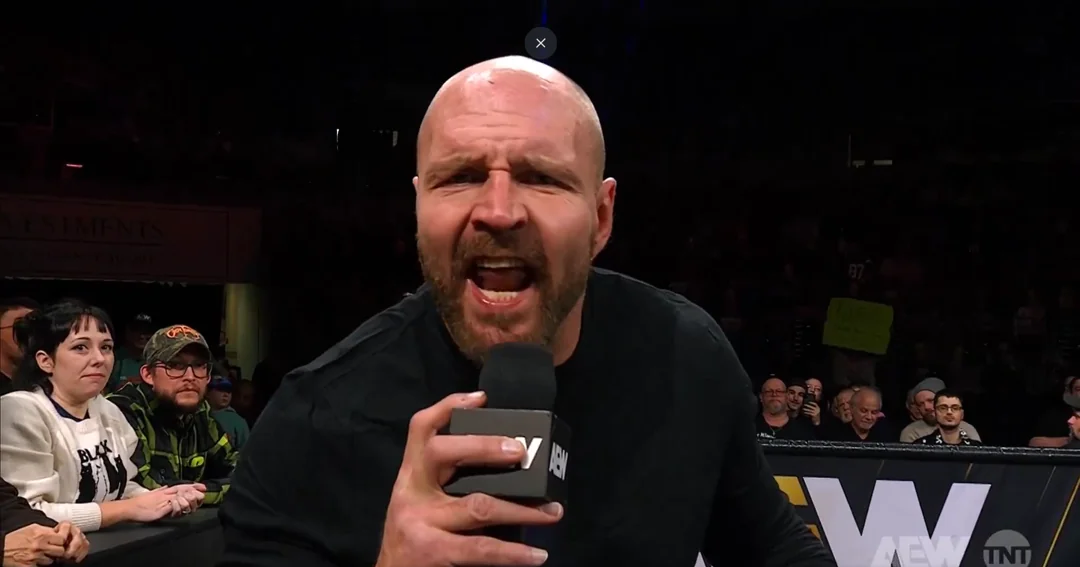
At AEW All Out, Moxley challenged reigning AEW World Champion Will Ospreay. After the match, AEW cameras captured Moxley delivering a promo about wrestling, sacrifice, greatness and the importance of appreciating the opportunities that come with being a professional wrestler. Standing behind him were members of the Death Riders, including PAC, the man wrestling fans also knew as Benjamin Satterley and, during his WWE career, Neville.
At the time, it was simply another Jon Moxley promo.
Nobody watching knew they were seeing PAC’s final appearance on AEW cameras. Nobody knew that within days, Moxley’s words would carry a completely different meaning.
PAC’s death at the age of 40 sent shockwaves through professional wrestling. When AEW Dynamite opened with that All Out footage, fans were suddenly watching something that could never be viewed the same way again. Moxley was talking about the importance of the moment while PAC stood behind him, surrounded by the people with whom he had spent so much of his career.
There was no planned farewell.
There was no retirement speech.
There was no storyline designed to make the moment emotional.
There was simply a group of wrestlers standing together after a show.
And now, that ordinary moment has become one of the most haunting pieces of footage in AEW history.
For longtime wrestling fans, there was also an eerie familiarity to what they were watching. It brought back memories of The Ultimate Warrior’s final appearance on Monday Night Raw in 2014, when Warrior spoke about every man eventually taking his final breath before his death the following day. The circumstances are obviously different, and there is no suggestion that Moxley could have known what was coming, but both moments carry that uncomfortable feeling of watching something completely ordinary become something much more significant after tragedy strikes.
That is where this story becomes bigger than PAC’s final appearance.
It becomes a story about Jon Moxley.
Moxley has been one of AEW’s most recognizable figures since the company’s beginning. He has been a world champion, an anti-hero, a member of the Blackpool Combat Club, a Death Rider and one of the company’s most dependable performers. But over the years, another part of Moxley’s role has become increasingly apparent. When AEW’s locker room faces a moment that extends beyond wrestling, Moxley has repeatedly been one of the people his fellow wrestlers look toward.
His leadership didn’t begin with PAC.
When Brodie Lee died in December 2020, the effect on AEW’s locker room was profound. Lee was more than a wrestler to the people around him. He was a teammate, a friend and a person who had developed deep relationships throughout the company.
Moxley was part of the effort to honor Lee and help his fellow wrestlers navigate the loss. During AEW’s celebration of Lee’s life, the focus wasn’t on Moxley. It was on Brodie, his family, his friends and the legacy he had left behind.
That distinction says a lot about Moxley’s leadership.
He doesn’t necessarily need to be the person delivering the biggest speech or standing in the middle of the room. His value has often been in recognizing what the people around him need and helping them get through it.
That became evident again in 2022.
Following the chaos surrounding AEW All Out and the backstage confrontation involving CM Punk, Moxley, Bryan Danielson and Chris Jericho were among the wrestlers who helped address the locker room during an extremely turbulent period for the company. Moxley wasn’t AEW’s president. He wasn’t an executive sitting in an office making corporate decisions. He was a wrestler trying to help his fellow wrestlers navigate a situation that had become bigger than any individual performer.
That is an important distinction when discussing leadership in professional wrestling.
Titles can be given.
Positions can be assigned.
Trust has to be earned.
And Moxley had earned the trust of the people around him.
That history makes what happened following PAC’s death even more significant.
Lance Archer and Marina Shafir weren’t simply dealing with the loss of another performer. They were dealing with the death of someone they considered part of their wrestling family. Yet both still had to make a difficult decision: whether they could walk through the curtain and perform while dealing with unimaginable grief.
Moxley was part of those conversations.
Archer competed after learning of PAC’s death and later spoke emotionally about what had happened. Shafir, who had been closely connected with PAC and the Death Riders, also competed while dealing with the same loss.
The significance wasn’t simply that they wrestled.
It was that they found a way to wrestle while carrying something far heavier than any storyline.
Moxley couldn’t take away their grief, and he wasn’t trying to. His role was to help his teammates carry it and remind them that they didn’t have to face the moment alone.
That is a very different kind of leadership than what we normally see in professional sports.
It isn’t measured in victories.
It isn’t measured in championships.
It isn’t measured by how loudly somebody speaks.
Sometimes leadership is the conversation in the locker room when someone doesn’t know whether they can go through with something. Sometimes it is simply being the person another wrestler trusts enough to call when everything around them feels overwhelming.
That appears to be the role Moxley has developed inside AEW.
And on Wednesday night, the entire locker room seemed to understand it.
The Death Riders weren’t simply a wrestling faction anymore. They were friends mourning a friend. Will Ospreay wasn’t simply the reigning AEW World Champion. He was another wrestler dealing with the loss of someone he shared the ring with. The people walking through the locker room weren’t simply characters preparing for television. They were human beings trying to process the death of someone they knew and loved.
The emotion was visible.
The wrestling world outside AEW recognized it as well.
Tributes came from across the industry, including WWE and Dwayne “The Rock” Johnson. The Rock’s message was significant because it crossed the promotional boundaries that wrestling fans have spent years building. For a moment, AEW versus WWE wasn’t important. Ratings weren’t important. Championships weren’t important.
A wrestler was gone.
And the wrestling community responded.
That doesn’t erase the competition between wrestling companies, nor should it. AEW and WWE remain competitors, and fans will continue to support the promotions and wrestlers they connect with. But tragedy has a way of reminding everyone that beneath that competition is a shared profession and a community of people who have spent their lives traveling the same roads, working the same buildings and sacrificing for the same dream.
You never know how much someone is beloved until tragedy hits.
PAC’s death made that impossible to ignore.
It also put Moxley’s role in AEW into sharper focus.
He didn’t make PAC’s death about himself. He didn’t try to become the spokesperson for the grief. Instead, he continued doing what he has repeatedly done throughout his AEW career: helping the people around him find a way forward.
He did it after Brodie Lee’s death.
He did it when AEW’s locker room was fractured in 2022.
And now he has done it following PAC’s death.
The circumstances were different, but the responsibility was remarkably similar.
Be there.
Help the people around you.
Keep the locker room together.
And when the time comes, walk through that curtain.
That is why calling Jon Moxley the core and conscience of AEW doesn’t feel like an empty compliment. It is a role he has earned over years of being the person his fellow wrestlers can rely on when professional wrestling stops being about wrestling.
And perhaps that is why the All Out footage has become so powerful.
Go back and watch it again.
Moxley is speaking.
The Death Riders are standing behind him.
And PAC is right there with them.
At the time, nobody knew what was coming. There was no indication that the man standing among his friends would be gone days later. There was no indication that the words Moxley was delivering would eventually sound like something much closer to a farewell.
But that’s what life does.
It changes the meaning of moments after they’ve already happened.
The wrestling world spends an enormous amount of time debating who is better, which company is better, which championship matters most and which wrestler deserves the spotlight. Those conversations are part of what makes being a wrestling fan fun.
Then something happens that puts all of it into perspective.
A human being is gone.
A family is grieving.
A locker room is hurting.
And suddenly, the arguments don’t seem nearly as important.
What matters is the person.
What matters is the memory.
What matters is the people left behind.
Jon Moxley didn’t ask to become the face of AEW’s grief.
He didn’t have to.
He simply stepped forward when his people needed him, just as he has done at other difficult moments in AEW’s history.
That is leadership.
Not because someone gave him the title.
Not because he holds a corporate position.
Because his fellow wrestlers trust him.
And that may be the most important role Jon Moxley has played in AEW.
He is not simply one of the company’s biggest stars.
He is one of the people who helps hold its locker room together.
He is the core and conscience of AEW.
And PAC’s final appearance makes that role even more meaningful.
The final image isn’t PAC celebrating a championship. It isn’t a dramatic storyline ending or a carefully scripted farewell.
It’s Ben Satterley standing beside his friends after a wrestling show.
Then he walks away.
At the time, it was just another moment.
Now, it feels like everything.
And perhaps that’s the lesson this entire week has left behind: We spend so much time waiting for the next match, the next show, the next moment that we sometimes forget to appreciate the people standing beside us right now.
Because sometimes you don’t realize you’re watching a goodbye until it’s already over.
And sometimes, the most important thing you can do is simply make sure the people around you know how much they mean to you while you still have the opportunity to tell them.

Featured Articles





Featured Writers